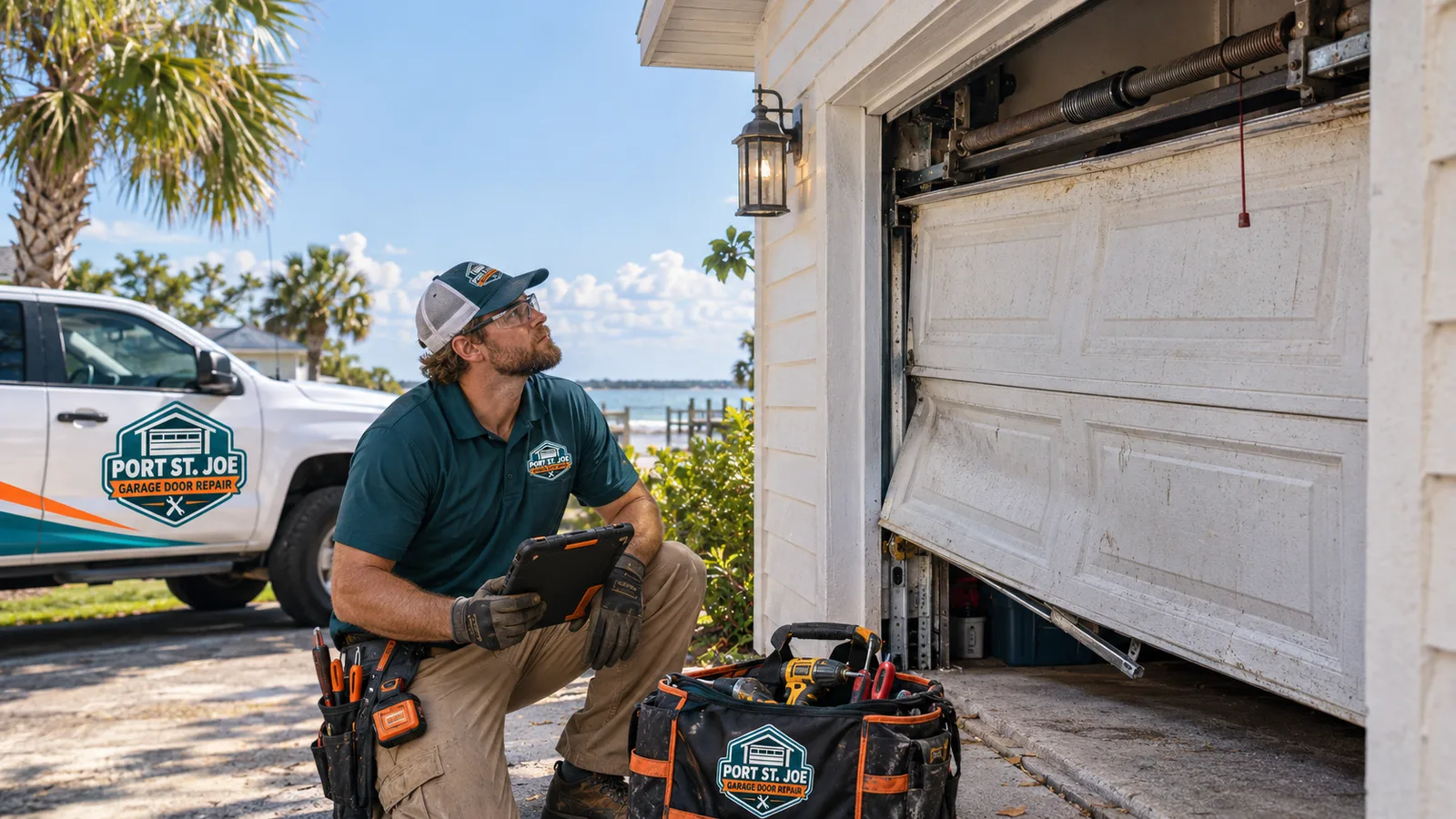
A residential garage door technician inspecting the track and spring assembly of a stuck door at a coastal Florida home

Emergency garage door service in Port St. Joe, Florida

Emergency Garage Door Repair Port St. Joe FL

Get a stuck, damaged, or unsecured garage door assessed and moved toward a safe repair plan.

✓Stuck and unsecured doors ✓Spring, cable, track, and opener failures

Urgent door diagnosis

Help for a Garage Door That Will Not Move Safely

When a garage door is stuck open, hanging unevenly, or refusing to lift, the immediate concern is safety and security. Port St. Joe Garage Door Repair provides emergency garage door repair in Port St. Joe, FL for urgent failures that keep the door from operating or leave the garage exposed.

A garage door is the largest moving part on many homes. Its springs counterbalance substantial weight, while cables, drums, rollers, tracks, and the opener work together to control movement. A failure in one part can place extra strain on the rest of the system. Avoid pulling, pushing, or repeatedly cycling a door that looks crooked, makes a sharp popping sound, or has a loose cable.

To make the system safe and functional, Port St. Joe's local garage door service identifies the failed component, checks the door's balance and travel path, and explains the necessary repairs.
Urgent failure signs

Garage Door Problems That Need Prompt Attention

Door Stuck Open

An open garage can expose vehicles, tools, and the entry into the home. The door should be checked for broken springs, cable trouble, track obstruction, or opener failure before anyone tries to force it closed.

Broken Torsion or Extension Spring

A snapped spring may leave the door too heavy for the opener or a person to lift safely. Springs are under stored tension and require the correct replacement parts and handling methods.

Loose or Snapped Cable

A cable can jump a drum, fray, or break. The door may then rise unevenly or bind in the tracks. Keep clear of the cable and do not operate the door.

Door Off Track

Bent track, impact damage, failed rollers, or uneven cable tension can pull a door out of alignment. Continued movement may deform panels or cause the door to fall.

Opener Runs but the Door Does Not Move

This symptom can point to a disconnected trolley, stripped drive component, broken spring, or failed opener part. A manual balance check helps separate door trouble from opener trouble.

Door Will Not Close

Photo-eye alignment, an obstruction, damaged wiring, track trouble, or a force-setting issue can stop the closing cycle. Safety sensors should never be bypassed to keep a door moving.

Keep clear of loaded hardware

What to Do While the Door Is Stuck

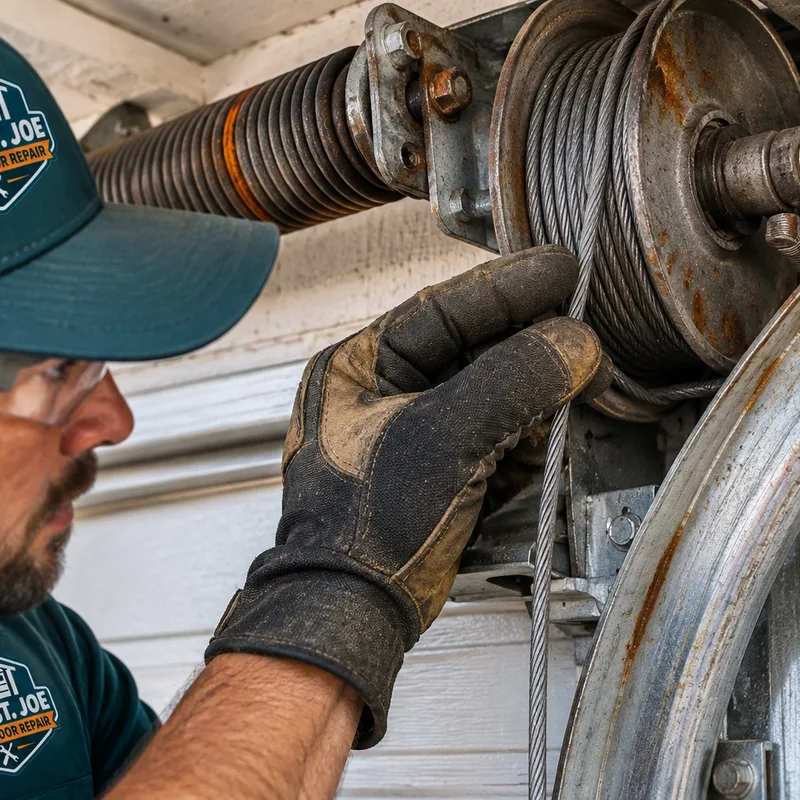
Close view of a frayed garage door lift cable near the bottom bracket, photographed to show a condition that should not be handled by a homeowner

Stop using the wall control and remote if the door is crooked, jerking, grinding, or supported by one side. Keep people, pets, and vehicles away from the opening. Do not loosen bottom brackets, spring hardware, cable drums, or anything attached to a loaded cable.

If the door is open and appears unstable, do not stand or walk beneath it. Disconnecting the opener does not make a heavy or unbalanced door safe; it can release the door from the only mechanism helping to hold it. Leave the emergency-release cord alone when a spring is broken or the door is hanging unevenly.

Coastal Northwest Florida brings humid, salt-laden air that can accelerate corrosion on exposed steel hardware. Rust on cables, springs, bearings, fasteners, and lower door components deserves attention because weakened parts may fail suddenly. After high winds, inspect visually from a safe position for bent tracks, shifted panels, debris, and damaged seals, but do not attempt to straighten a loaded door.

From inspection to testing

How Emergency Garage Door Repair Works

  1. Step 1 of 5

    Keep Clear of the Door

    Keep people and vehicles away from a crooked door, loose cable, spring gap, bent track, impact damage or storm debris.

  2. Step 2 of 5

    Keep the Area Clear

    Stop operating the system and move people away from the door. If a vehicle is trapped inside, do not attempt to lift the door until its spring and cable condition has been assessed.

  3. Step 3 of 5

    Inspect the Complete Door System

    The assessment should cover springs, cables, drums, rollers, hinges, tracks, bearings, brackets, panels, safety sensors, and opener connection. This helps distinguish the immediate failure from related damage.

  4. Step 4 of 5

    Review the Repair Scope

    The failed parts, available repair options, and factors affecting safe operation are explained before work begins. Correct spring size depends on the door's weight, height, track setup, and spring configuration.

  5. Step 5 of 5

    Repair and Test

    After the required repair, the door should be checked for balance, smooth manual travel, secure hardware, cable alignment, opener operation, travel limits, force response, and photo-eye reversal.

Full-system assessment

Conditions an Emergency Inspection May Find

Counterbalance failure

Broken springs, displaced cables, worn drums, or rough bearings can leave the door too heavy, uneven, or unstable to move normally.

Track and roller damage

Bent track, failed rollers, shifted brackets, or impact damage may pull the door out of alignment and obstruct its travel path.

Opener or sensor trouble

A disconnected trolley, drive failure, damaged wiring, or photo-eye issue may prevent movement even when the visible door hardware appears intact.

Corrosion and connected damage

Gulf Coast humidity, wind-driven rain, and salt air may contribute to corroded fasteners, frayed cables, worn lower hardware, and parts that should not be adjusted under load.

Coastal repair considerations

Emergency Garage Door Repair for Port St. Joe's Coastal Conditions

Urgent garage door failures in Port St. Joe require more than getting the door to move once. The repair needs to account for the full counterbalance system and the condition of hardware exposed to Gulf Coast humidity, wind-driven rain, and salt air. Corroded fasteners or frayed cables can affect whether a component can be safely adjusted or should be replaced.

If wind or an impact has pushed a door out of its tracks, the panels, hinges, rollers, flag brackets, vertical tracks, horizontal tracks, and supporting structure may all need inspection. A door that closes after being forced back into place can still have damaged hardware or poor cable tension. Likewise, replacing a broken spring without checking door weight and balance can leave the opener carrying more load than intended.

Port St. Joe Garage Door Repair handles the immediate fault as the starting point, then checks the connected parts that control safe travel. The goal is a door that closes securely and completes a controlled operating cycle, not a temporary movement that hides the underlying problem.

A stuck or unstable garage door can worsen with another operating attempt.

CALL NOW: (850) 403-9289

Practical answers

Emergency Garage Door Repair Questions

Can I close a garage door after a spring breaks?+

Do not try to close or lift a door with a broken spring unless a garage door professional has determined that it can be moved safely. The spring counterbalances the door's weight, so disconnecting the opener may allow the door to drop. Keep the opening clear and tell Port St. Joe Garage Door Repair whether the door is fully open, partly open, or closed.

What qualifies as an emergency garage door repair in Port St. Joe, FL?+

A door that is stuck open, hanging crooked, off track, unable to secure the garage, or at risk of falling warrants urgent attention. Broken springs, loose cables, impact damage, and a door trapped around a vehicle also justify prompt assessment. Stop operating the system when movement is uneven or hardware is visibly displaced.

Can a snapped garage door cable be repaired?+

A snapped or badly frayed lift cable is generally replaced rather than spliced. The technician should also inspect the matching cable, drums, bottom brackets, springs, bearings, rollers, and tracks because another fault may have caused uneven tension. Salt-related corrosion is an additional concern on exposed metal components in coastal Port St. Joe.

Why does my opener run while the garage door stays closed?+

The opener may have a disconnected trolley, stripped drive part, or broken internal component, but a broken spring can produce a similar symptom because the door has become too heavy to lift. Stop cycling the opener. A manual balance and hardware inspection can identify whether the failure is in the door, the opener, or both.

Can I use the emergency-release cord on a stuck garage door?+

Do not pull the emergency-release cord when the door is open, crooked, or suspected of having a broken spring or cable. Releasing the trolley can allow an unsupported door to fall. The cord is intended to disconnect the opener, but it does not remove the door's weight or restore a failed counterbalance system.

Will an emergency repair require a complete new garage door?+

Many urgent failures can be addressed by repairing the affected hardware, but replacement may be considered when panels, tracks, attachment points, or several major components have extensive damage. The appropriate approach depends on the door's physical condition, parts compatibility, safe operation, and the scope of storm or impact damage.

Stop operating the door

Get a Stuck Garage Door Assessed

Keep clear of damaged hardware and stop operating the system until the fault can be checked.