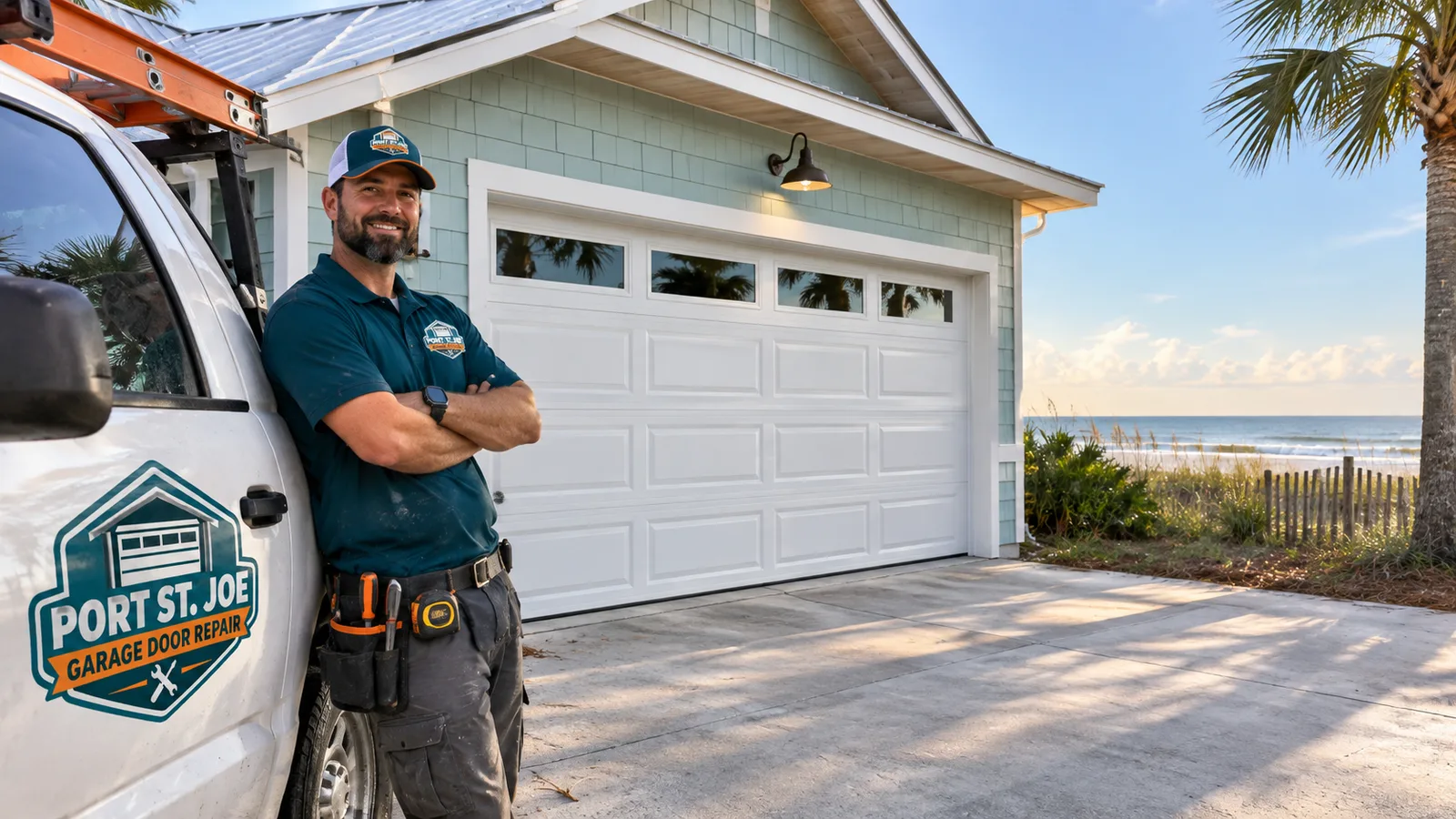
A newly installed insulated steel garage door on a coastal Florida home, shown closed with clean panel alignment and finished exterior trim

Garage door installation in Port St. Joe, Florida

Garage Door Installation Port St. Joe FL

Get a new door, tracks, springs, hardware and opener planned as one matched system for dependable daily operation.

✓Door and operating hardware planned together ✓Balance and safety controls tested

Measured for the opening

A New Garage Door Planned for the Whole Opening

A garage door installation in Port St. Joe should begin with accurate measurements and a clear look at the opening, framing, headroom, side room and floor. Port St. Joe Garage Door Repair uses those details to plan the door and operating hardware as a complete system rather than treating the panels, tracks and opener as separate purchases.

The work may include removal of an existing door, installation of new vertical and horizontal tracks, spring and cable setup, panel assembly, perimeter weather seal and opener installation. Door weight determines the correct spring setup, while the available ceiling space affects the track configuration and opener placement. A finished installation should move smoothly by hand before the opener is connected.

For each installation, Port St. Joe's garage door specialists help property owners compare practical door and opener choices for the actual opening. The goal is a clear scope before installation begins, including the selected construction, hardware requirements and any preparation needed around the jambs or ceiling.

Coastal material selection

Choosing a Door for Port St. Joe's Coastal Conditions

Salt-laden coastal air and wind-driven rain can be hard on exposed metal, fasteners and seals. Material choice, finish condition and weather sealing therefore deserve close attention in Port St. Joe. Galvanized steel components, factory-applied finishes and properly fitted bottom and perimeter seals can help reduce direct exposure, but every door still needs routine inspection and cleaning.

Steel doors are common because they offer several panel styles and insulation levels. A non-insulated door may suit a detached garage where temperature control is not a priority. Insulated steel doors use a polystyrene or polyurethane core and can provide a more solid feel while reducing heat transfer through the door. The right choice depends on how the garage is used, its exposure and the available budget.

Florida wind requirements also matter. A wind-rated door is an engineered assembly that may use reinforced sections, heavier hardware and specified attachment points. The required design pressure depends on the property and applicable building requirements, so a product should be selected for the specific opening rather than assumed suitable because it is labeled for Florida.

Matched components

What a Complete Installation Can Include

Door and Panel System

Steel sections are selected for the opening size, desired insulation and exterior style. Panel thickness, reinforcement and window placement can affect weight and hardware requirements.

Tracks and Supporting Hardware

Vertical tracks must be plumb, horizontal tracks must be supported correctly, and rollers need a clear path. Brackets, hinges and fasteners are matched to the door system.

Springs, Drums and Cables

Torsion or extension spring hardware counterbalances the door. Spring selection is based on door weight and geometry, and cables must track correctly on the drums or pulleys.

Garage Door Opener

The opener is chosen for the door type and use pattern, then mounted and adjusted after the door is balanced. Travel limits, force settings and safety controls are tested during setup.

Weather Sealing

A bottom seal and perimeter stop help close gaps around the opening. The condition and level of the garage floor affect how evenly the bottom seal makes contact.

Removal and Final Setup

When included in the agreed scope, the old assembly is taken down before the new system is fitted. Final setup covers alignment, balance, lubrication and operating checks.

From measurement to testing

Our Garage Door Installation Process in Port St. Joe

  1. Step 1 of 5

    Inspect and Measure the Opening

    Port St. Joe Garage Door Repair checks opening width and height, side room, headroom, backroom, framing and the garage floor. Ceiling obstructions, outlets and the intended opener location are also reviewed.

  2. Step 2 of 5

    Define the Door and Hardware

    The door construction, insulation, track arrangement, spring system and opener are specified together. Wind-rating requirements and attachment details are considered for the property and opening.

  3. Step 3 of 5

    Prepare the Work Area

    Vehicles and stored items need enough clearance from the opening and track area. Existing door removal and any agreed framing preparation take place before the new tracks and panels are installed.

  4. Step 4 of 5

    Install and Balance the Door

    Tracks, sections, rollers, hinges, cables and springs are assembled and adjusted. The door is then operated manually to confirm that it stays on track and is properly counterbalanced.

  5. Step 5 of 5

    Set Up and Test the Opener

    If an opener is included, it is mounted and connected after the door operates correctly by hand. Travel limits, photoelectric sensors and the automatic reversal function are tested before completion.

Balanced before powered

The Opener Must Match the Installed Door

An automatic opener moves the door, but the spring system carries the door's weight. A correctly balanced door should operate smoothly by hand with the opener disconnected. Installing a more powerful motor does not correct poor balance, binding tracks or unsuitable springs.

Common residential choices include chain-drive, belt-drive and wall-mount openers. Chain drives use a metal chain and are a familiar option. Belt drives tend to run more quietly. Wall-mount units connect beside the torsion shaft and can preserve overhead space, but they require a compatible torsion setup and adequate side room.

Photoelectric sensors are positioned near the floor and aligned across the opening. The opener's travel limits and force settings must also be set for the installed door. During final testing, the door should stop and reverse when the safety system is triggered, and the emergency release should remain accessible.

Fit and maintenance details

Details That Affect Fit and Long-Term Operation

Garage openings that look similar can require different hardware. Low ceilings may call for low-headroom track. A high ceiling may make a high-lift arrangement worth considering when the framing and door system support it. Rear clearance matters because the horizontal tracks and opener rail extend into the garage.

The floor also affects the finished seal. A sloped or uneven slab can leave daylight under a straight door, even when the door itself is level. The bottom retainer and seal should be chosen with that condition in mind. Jamb material and condition matter as well because track brackets and perimeter stop need sound attachment surfaces.

After installation, owners should watch for frayed cables, loose hardware, damaged rollers, changing gaps and unusual noise. Springs and cables remain under high tension and should not be adjusted by an untrained person. Keeping the tracks clear and cleaning coastal residue from exposed surfaces can help owners spot corrosion or damage before operation is affected.

Opening size, garage use and opener requirements help define a properly matched installation.

CALL NOW: (850) 403-9289

Practical answers

Garage Door Installation Questions

How long does a garage door installation in Port St. Joe take?+

A straightforward residential replacement is often completed within one working day after the correct door and hardware are available. Unusual track layouts, framing work, electrical changes or installation of a large wind-rated assembly may require more time.

Do I need a wind-rated garage door in Port St. Joe?+

The required door rating depends on the property, opening and applicable building requirements. In coastal Florida, the selected assembly may need a documented design pressure and specified reinforcement or attachment pattern. The door label and product approval information should match the planned installation rather than relying on a general Florida designation.

Can a new garage door use my existing tracks and springs?+

New doors should use tracks, springs and hardware confirmed as compatible with the new assembly. Door weight, panel thickness, track geometry and spring specifications vary between systems. Reusing mismatched parts can cause poor balance or binding, so existing components must be evaluated before they are included in the scope.

Should I choose an insulated garage door?+

An insulated door is often worth considering when the garage is attached, used as a workspace or exposed to strong afternoon sun. Insulation can reduce heat transfer through the door and may make the sections feel more rigid. It does not air-condition the garage, and gaps around the perimeter still need proper sealing.

Can an opener be installed at the same time as the new door?+

Yes, an opener can be installed as part of the same project when the garage has suitable space and electrical access. The door is balanced and tested manually first. The opener is then mounted, its travel and force are adjusted, and its photoelectric sensors and reversal function are tested.

What should I do before installation day?+

Clear vehicles and stored items away from the door, tracks, ceiling work area and opener location. The installer needs safe access to both sides of the opening and enough room to handle full-width door sections. Port St. Joe Garage Door Repair can identify any opening, framing or access preparation during the measurement visit.

Can I install a wider or taller garage door than the existing one?+

Changing the opening size is possible only when the structure can support the alteration and the work meets applicable requirements. It may involve framing changes, a new header, exterior finishing and different track clearances. That work should be defined before the door is ordered because the finished opening determines the door size.

A measured installation scope

Plan Your New Garage Door Installation

A measured scope helps match the opening, door construction, tracks, springs, hardware and opener.