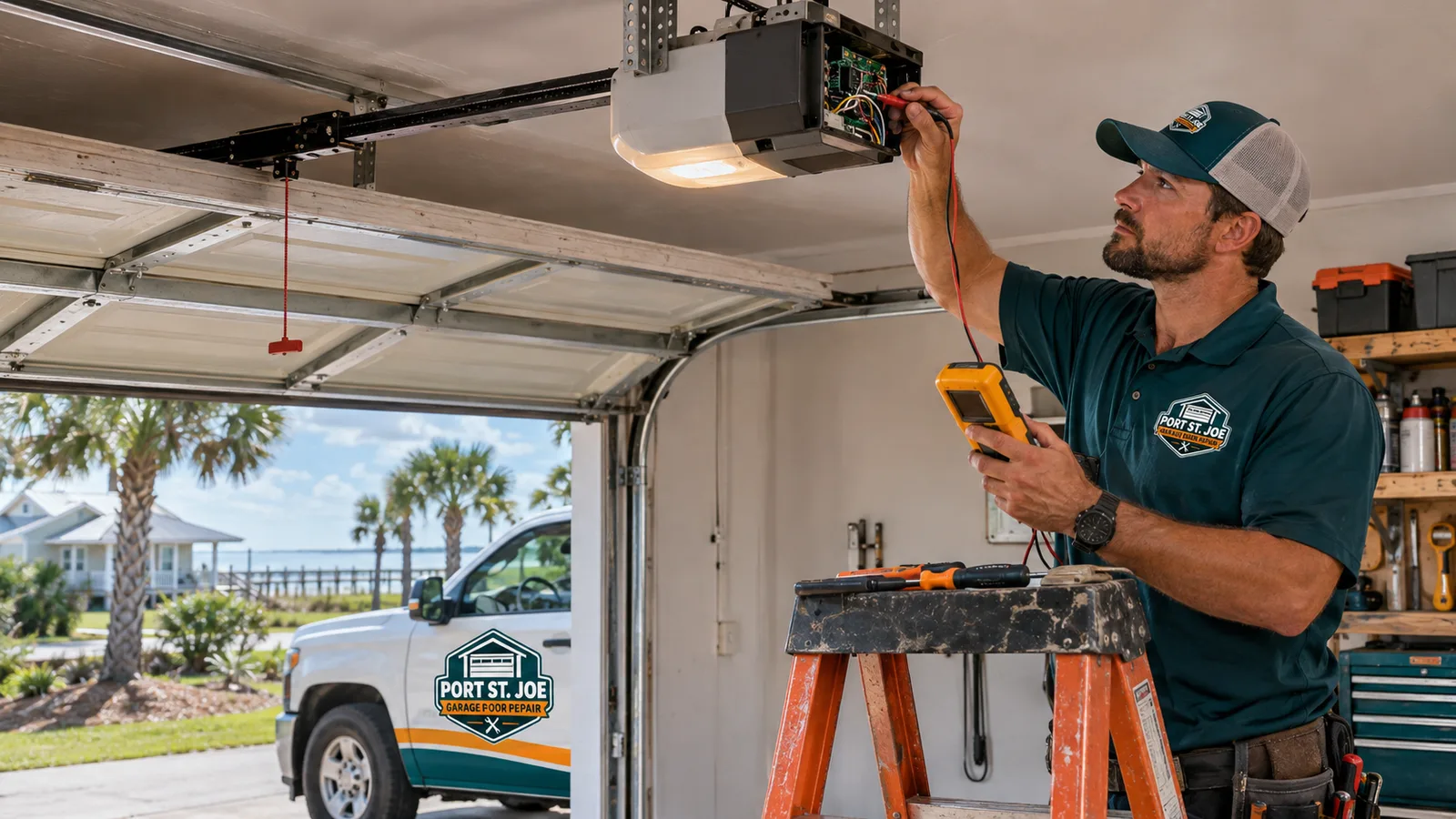
A technician diagnosing a ceiling-mounted garage door opener with the cover removed and the door safely secured

Garage door opener service in Port St. Joe, Florida

Garage Door Opener Repair Port St. Joe FL

Get a clear diagnosis for an opener that hums, reverses, stops mid-cycle, or no longer responds to its remotes, keypad, or wall control.

Complete system diagnosis

Pinpoint the Problem Before Replacing the Opener

Garage door opener repair in Port St. Joe, FL starts by separating an opener fault from a door problem. A motor may run while a stripped drive gear fails to move the trolley. A door may reverse because the photo eyes are misaligned, or it may stop because worn rollers, damaged tracks, or incorrect spring balance are placing too much load on the operator.

Port St. Joe Garage Door Repair checks the complete operating system rather than treating one symptom in isolation. Our garage door specialists serving Port St. Joe, FL inspect the opener, rail, trolley, door travel, controls, safety devices, and accessible wiring before discussing repair options. That approach matters in a coastal Florida climate, where humid, salt-laden air can contribute to corrosion at terminals, brackets, and exposed hardware.

Do not repeatedly cycle an opener that hums without moving, smells hot, or makes grinding sounds. Keep people and vehicles clear of the opening. If the door is crooked, unusually heavy, or has a loose cable, leave it closed when possible and arrange an inspection rather than pulling the emergency release.
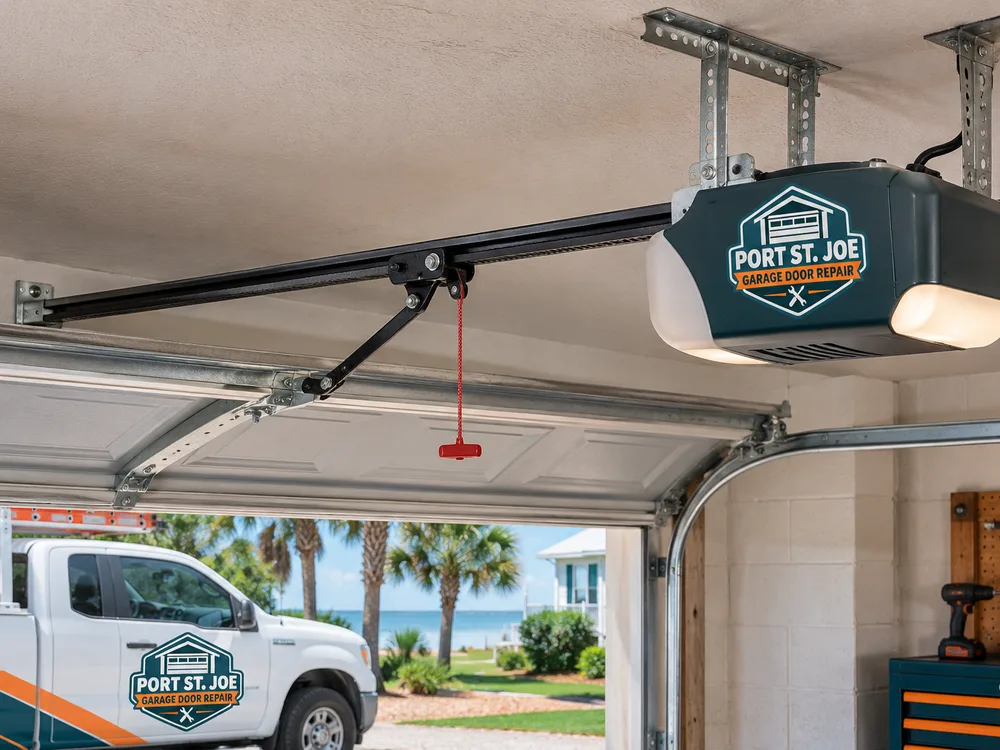
Common operating faults

Garage Door Opener Problems We Diagnose

Motor Runs but the Door Does Not Move

Humming, spinning, or grinding can point to a stripped gear, disconnected trolley, damaged drive component, seized door hardware, or motor-related fault. The door must be checked by hand before the opener is blamed.

Door Starts and Reverses

The cause may be blocked or misaligned photo eyes, loose sensor wiring, incorrect travel settings, excessive closing force, or resistance in the door. Flashing indicator lights often provide a useful diagnostic code.

Remotes or Keypad Quit

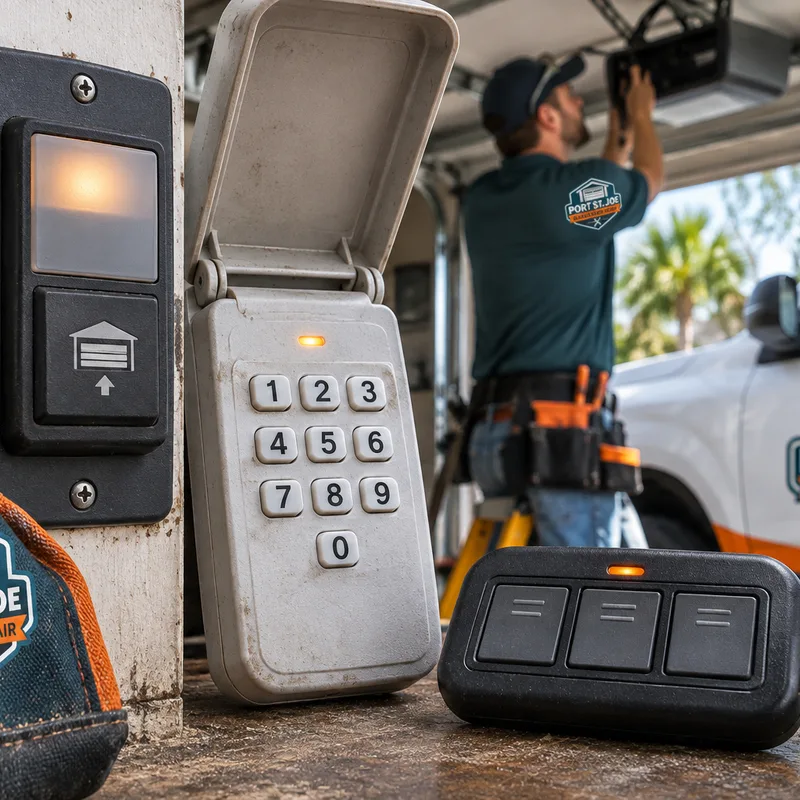
Testing may include batteries, lock mode, reprogramming, radio interference, antenna condition, keypad wear, and the receiver or logic board. A single failed remote suggests a different problem than every control failing together.

Wall Control Has No Response

A dead wall button can result from low-voltage wiring damage, a failed control, lost power, a tripped outlet, or an internal opener fault. Wiring should be inspected rather than bypassed.

Lights Flash or Stay On

Light behavior can relate to safety-sensor faults, control settings, socket damage, incompatible bulbs, or logic-board trouble. The opener model and indicator pattern help narrow the cause.

Opener Stops Mid-Travel

Travel limits, force settings, overheating, rail obstructions, drive wear, or a binding door may interrupt movement. Repeatedly increasing force is not a safe substitute for finding the resistance.

Connected controls and components

Remotes, Keypads, Sensors, Gears, and Wiring

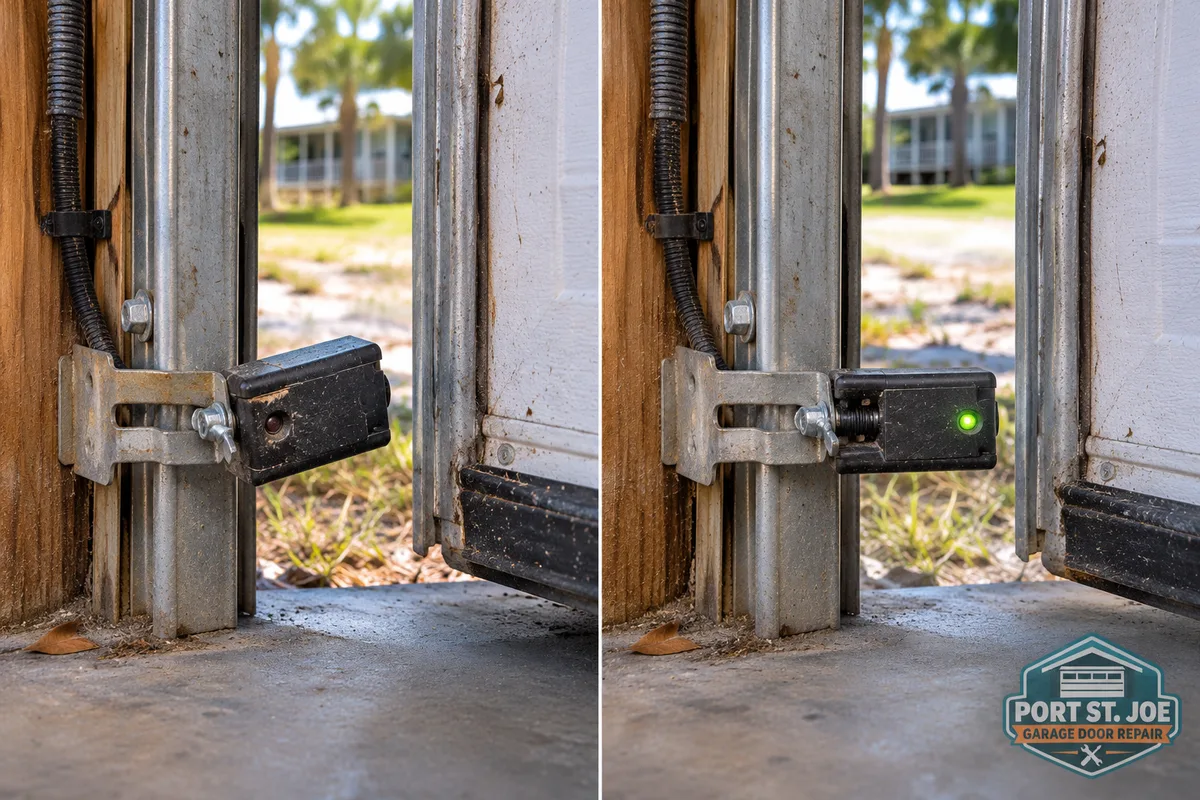
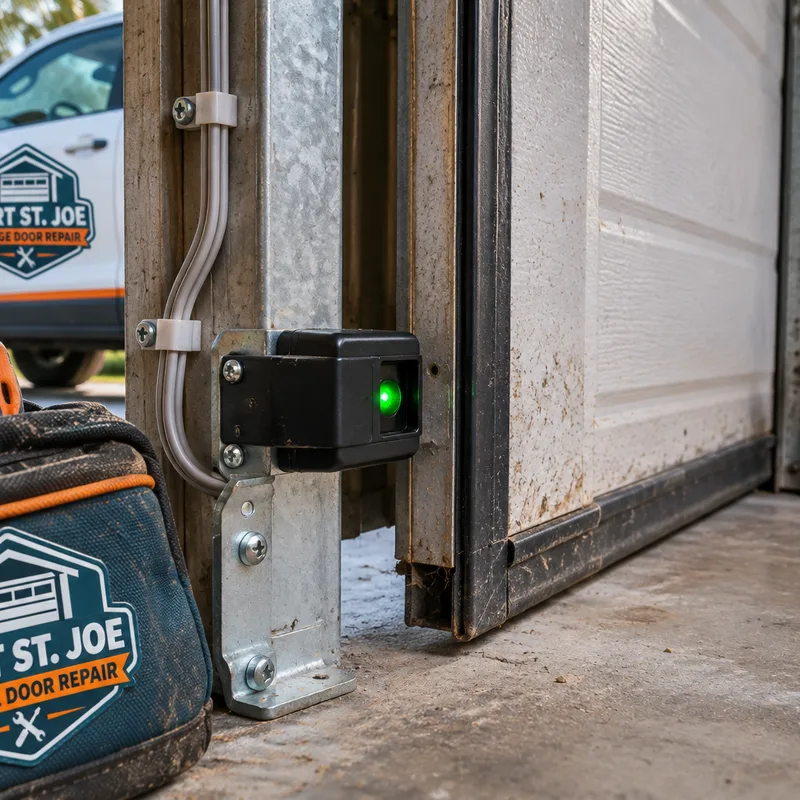
Close view of aligned garage door photo eyes with clean lenses, secure brackets, and intact low-voltage wiring near the floor

A garage door opener is a group of connected electrical and mechanical parts. The operator head contains the motor, drive components, controls, and logic board. The rail carries the trolley, while the safety-reversing system uses photoelectric sensors near the floor to detect an obstruction across the opening.

Sensor lenses can become dirty, brackets can shift, and low-voltage wires can loosen or corrode. Both photo eyes should be mounted securely, aimed at one another, and connected with intact wiring. Simply taping a sensor in place or bypassing it leaves a required safety function unreliable.

Remote and keypad faults require a different set of checks. Fresh batteries and correct programming may restore one transmitter, but widespread control failure may point to lock mode, power loss, interference, an antenna issue, or a receiver fault. Logic-board replacement should be weighed against the opener's condition, parts availability, and current safety equipment.

For chain, belt, and screw-drive units, the diagnosis also includes the rail and drive system. Chain tension, belt damage, trolley wear, internal gears, sprockets, and couplers can produce similar symptoms. Port St. Joe Garage Door Repair identifies the failed component before recommending a repair.

From symptoms to safety testing

How an Opener Repair Visit Works

  1. Step 1 of 5

    Check the Door and Controls

    The opener brand, model number, control response and indicator lights help identify compatible parts and likely faults.

  2. Step 2 of 5

    Inspect the Door and Operator

    The visit includes checking power, controls, safety sensors, accessible wiring, rail components, trolley engagement, and door movement. A balance check helps show whether the door itself is overloading the opener.

  3. Step 3 of 5

    Confirm the Fault and Scope

    Port St. Joe Garage Door Repair explains which component failed and whether adjustment, programming, wiring work, or part replacement is appropriate. If repair is impractical, the reasons should be clear before replacement is considered.

  4. Step 4 of 5

    Repair and Set the System

    Applicable parts are repaired or replaced, then travel and force controls are set according to the operator and door. Excessive force should never be used to push a binding door through its cycle.

  5. Step 5 of 5

    Test Operation and Safety Reversal

    The final checks cover wall-control operation, transmitters, keypad functions when applicable, full travel, photo-eye response, and the opener's contact-reversal behavior.

A practical recommendation

Repair or Replace the Garage Door Opener?

Repair often makes sense when the opener has a specific replaceable fault, compatible parts remain available, and the door moves smoothly when disconnected from the operator. A failed sensor, wall control, remote, gear kit, trolley component, or section of low-voltage wiring does not automatically mean the whole unit needs replacement.

Replacement may be the more practical choice when several major components have failed, the required parts are obsolete, the rail or operator housing is badly damaged, or the unit lacks functioning safety sensors. The recommendation should account for the total condition of the system rather than one component alone.

The opener must also be matched to the door. An operator is designed to move a properly balanced door, not lift a door made heavy by a broken spring or compensate for binding tracks. Repairing the opener without correcting that resistance can lead to another failure. Port St. Joe Garage Door Repair checks both sides of that relationship so the recommendation addresses the actual cause.

System-wide inspection

What a Careful Diagnosis Looks For

A ceiling-mounted opener with its cover removed to show the motor, drive gear, sprocket, and logic-board area during diagnosis
Internal wear can let the motor run without transferring motion to the trolley.
A technician testing a garage door opener wall control, remote transmitter, and wireless keypad together
Testing every control helps separate programming and battery issues from receiver faults.
A correctly installed garage door opener rail and trolley with neat low-voltage sensor wiring and a clear travel path
The operator, rail, controls, and safety devices should work as one system.

If the opener is humming, reversing, grinding, or ignoring its controls, arrange a diagnosis before repeated cycling causes additional damage.

CALL NOW: (850) 403-9289

Practical answers

Garage Door Opener Repair Questions

Why is my garage door opener humming but not moving the door?+

A humming opener often has a drive problem, a disengaged trolley, a motor fault, or a door that is too heavy or resistant to move. Stop repeated attempts and look for a broken spring, loose cable, crooked door, or grinding noise without touching springs or cables. Port St. Joe Garage Door Repair can test the door manually and inspect the operator's gears, sprocket, belt, chain, screw drive, and trolley.

Can garage door opener sensors be repaired, or do they need replacement?+

Sensors can often be restored when the problem is dirt, alignment, a shifted bracket, or a loose wire; damaged sensors or failed electronics require compatible replacements. Both photo eyes need clear lenses, stable mounts, intact low-voltage wiring, and an unobstructed beam. Humidity and salt-laden coastal air around Port St. Joe also make terminal corrosion worth checking.

Why does the remote work but the wall button or keypad does not?+

When one control works and another does not, the fault is usually limited to the failed control, its programming, battery, or wiring. A wired wall control may have a loose conductor or failed button, while a wireless keypad may need a battery, reprogramming, or replacement. Lock mode can also disable remote functions on some opener models, so control settings should be checked.

How long does garage door opener repair take?+

Many adjustments, programming tasks, sensor corrections, and common part repairs can be completed during one service visit, but uncommon parts may require additional time. The opener model, fault, door condition, and part availability affect the time required. Sharing the model number and symptoms before the visit can make parts identification easier.

Should I use the emergency release when the opener stops working?+

Use the emergency release only when the door is fully closed and appears stable, unless a trained technician directs otherwise. A door with a broken spring can be extremely heavy, and disconnecting an open or unstable door may let it fall. If the door is crooked, cables are loose, or a spring appears broken, keep clear and leave the release cord alone.

Why does my garage door close and immediately open again?+

Immediate reversal can result from blocked photo eyes, sensor misalignment, wiring faults, incorrect travel settings, or resistance as the door reaches the floor. Cleaning and visually checking the sensors is reasonable, but bypassing them is not. A technician should inspect the door's travel and opener settings if the beam is clear and the problem continues.

Is opener replacement better than repairing an older unit?+

Replacement is usually better when essential parts are obsolete, several expensive components have failed, or the operator lacks a working photo-eye safety system. A focused fault with available parts may still justify repair. Port St. Joe Garage Door Repair assesses the opener, rail, controls, safety devices, and door balance before outlining the practical options.

Restore dependable operation

Get the Opener Problem Properly Diagnosed

A system check can identify faults involving the opener, controls, safety sensors, wiring and door movement.